The Akedah Triptych
THE AKEDAH TRIPTYCH
By Maureen Drdak
Brothers in Blood; The Akedah Triptych
Martyrdom is a phenomenon at once public and private, sacred and profane. The complexity of its definition, and the contested nature of its virtue and vice, overlook the origins of its root matrix, ignoring the communal inheritance passed from Judaism to Christianity to Islam. Akedah, meaning The Binding, represents the continuum of religio-mythio memory so very alive in our post-modern world. There is an extensive and long existent body of scholarly writing and traditional literature in all three of the great Abrahamic religious traditions of monotheism which speaks to the sublime reverence and dark fascination in which it is held, and the centrality of its import. Its history as a favored theme in Western visual art is well known. Yet, until the late twentieth century, the destructive potential of its periodic exercise was containable within tolerable boundaries, physical, spiritual and political. That reality has changed, and the magnitude and scope of its nihilistic exercise has transcended the limitations of individual annihilation, going global in both reach and aspiration. When we reflect on the global theatre today, we must wonder at the strength of these reemerging forces and ask ourselves what they portend…and where we will find our guides.
Martyrdom is paradox. It lies at the intersection of death and sex, contraction and expansion, love and hate, will and slavery, self-aggrandizement and self-obliteration. But ever does it claim for itself the name of “sacrifice”. It is on this word-and this claim- that our minds—and understanding—must turn.
The Akedah Triptych uniquely embodies the distillation and unity of these archaic forces, addressing the global peril of their unrestrained contest for supremacy, offering the potential for transmutational transcendence through deeper understanding. Here. I’d like to share a bit about process and symbolism. The surfaces of these paintings are the result of an exacting procedure through which multiple layered surfaces and their sequential abrasion result in lustrous surfaces analogous to slate—my intention being an evocation of the Void. The flaming biomorphs, representative of the sacrificial dynamic, appear within a mineral particle thread-work structure representing the outline of the four-horned altar upon which ancient sacrifices were offered; the four horns representing the four cardinal points of the universe. In my works, this structure also represents my interpretation of the panjara, a Sanskrit word meaning a cage, denoting a diagram, grid, or framework for structure or action. A panjara is essentially a cage to contain, restrain and direct cosmic forces—commonly applied as frameworks underlying depictions of Hindu deities. It can also be understood as a temporal expression of the universal order contained in the microcosm of the psyche and the macrocosm of the world. Here, they contain and restrain the sacrificial dynamic in The Akedah Triptych, inviting introspection.
Note; The companion work, The Killing of Lions; an Iraqi war meditation, is in the collection of the Emir Father Hamad Khalifa al Thani and Sheikha Mozah in Qatar. https://www.maureendrdak.com/the-killing-of-lions-an-iraqi-war-meditation#
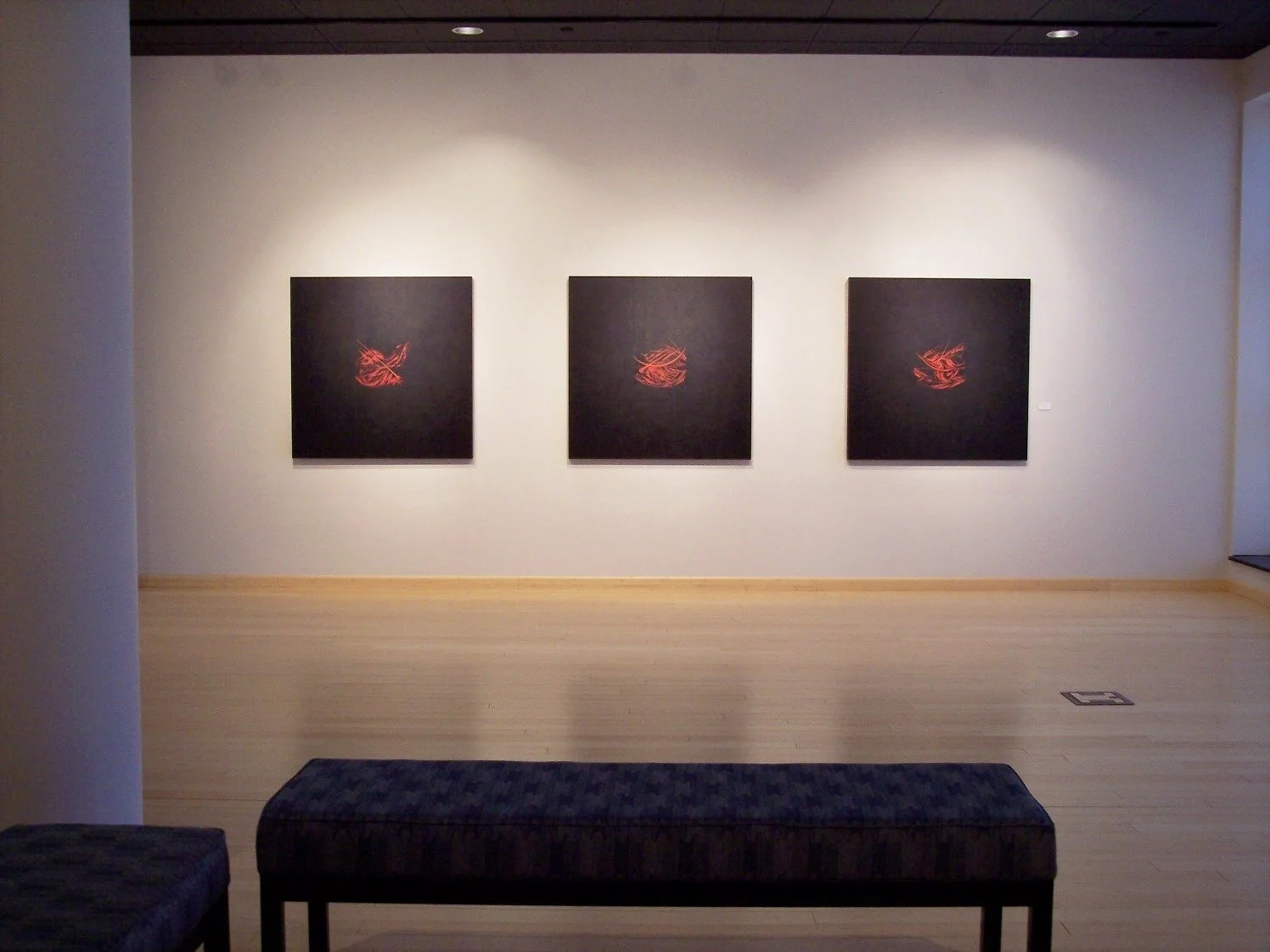
THE AKEDAH TRIPTYCH, 2008, Installation at the Gallery at Penn College, Penn College of Technology. Three works, each at 48 x 48 x 2 inches. Acrylic and mineral particle threads on archival cradled wood panels.
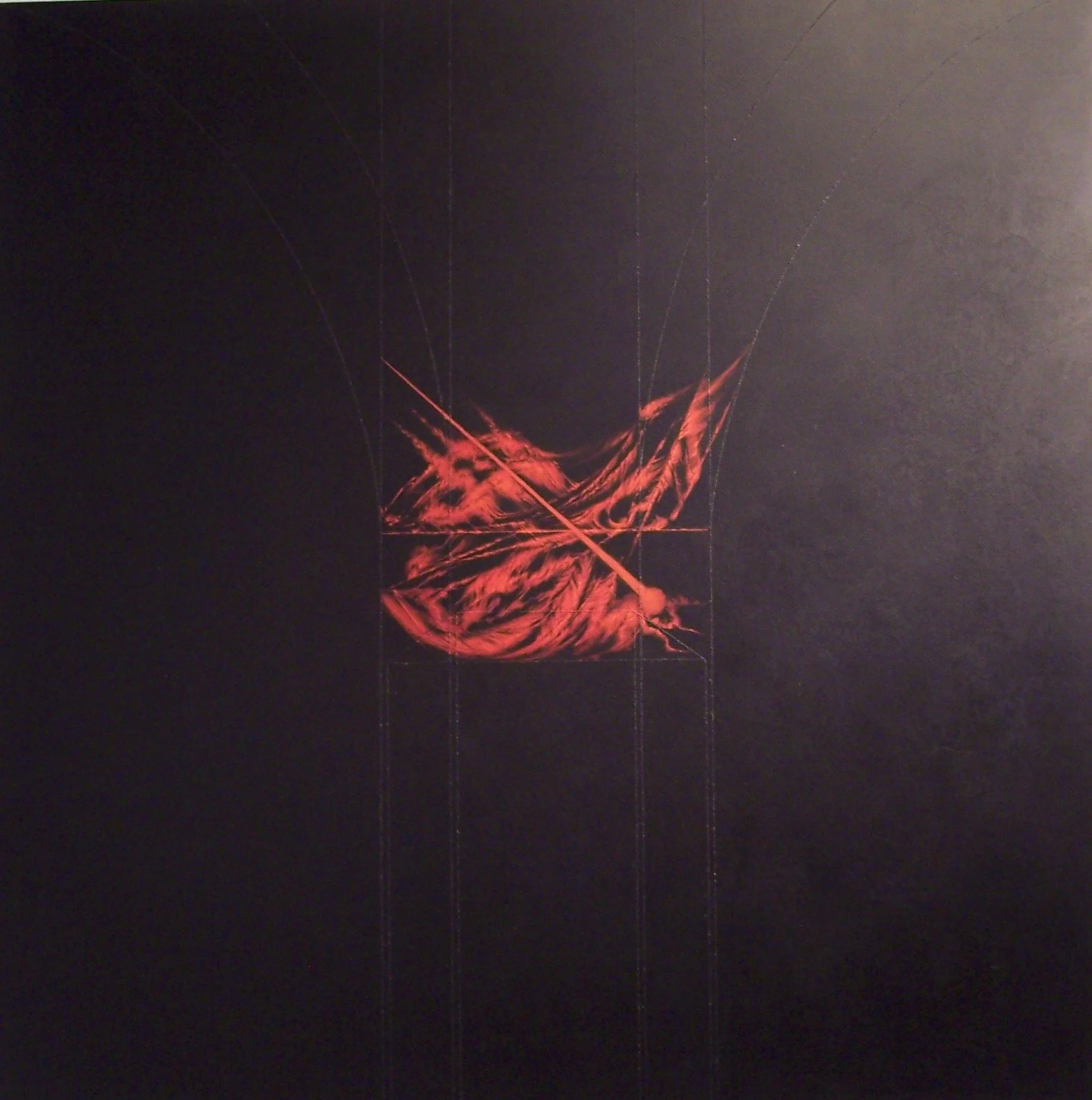
ISAAC, full image
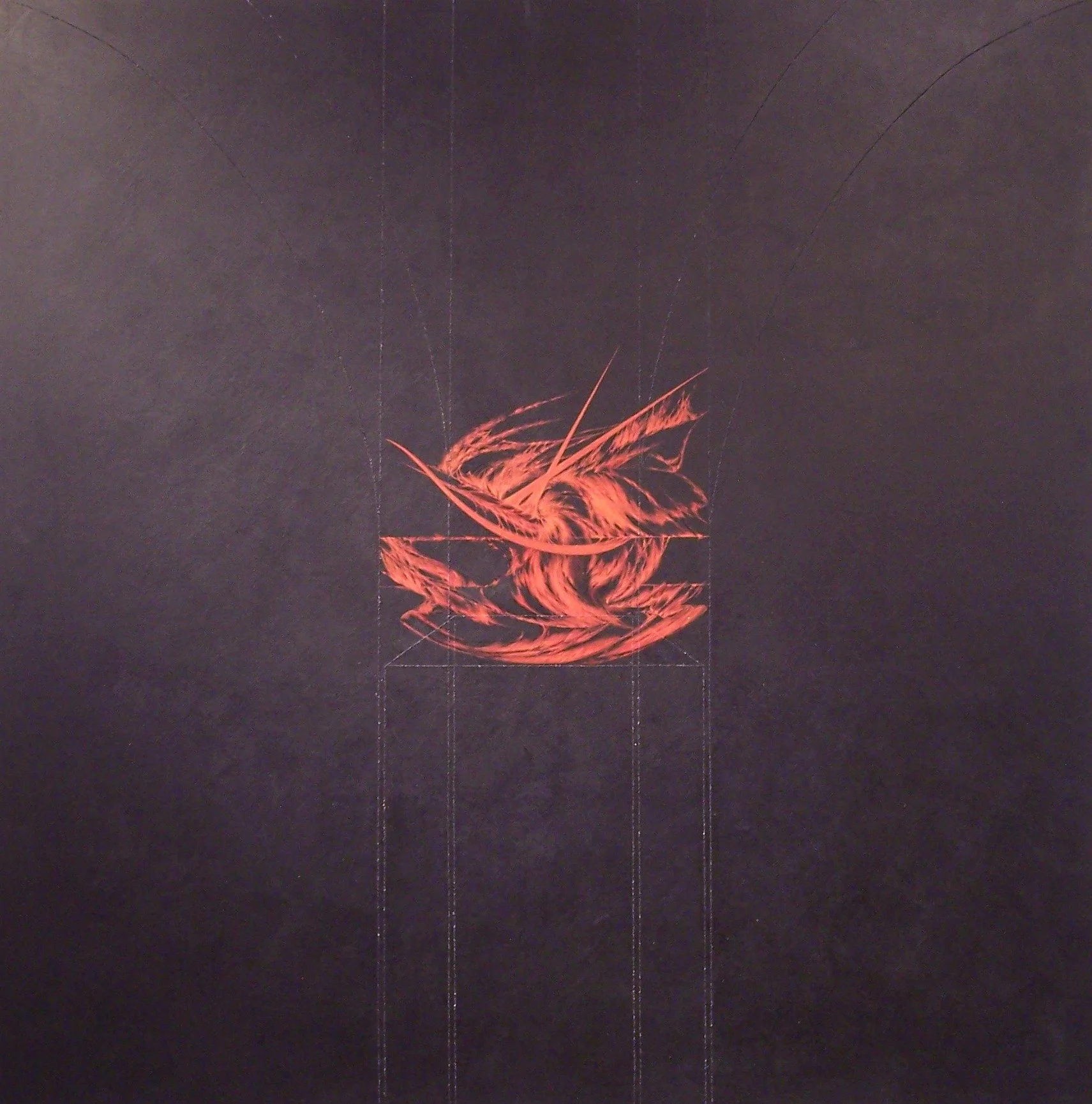
JESUS, full image
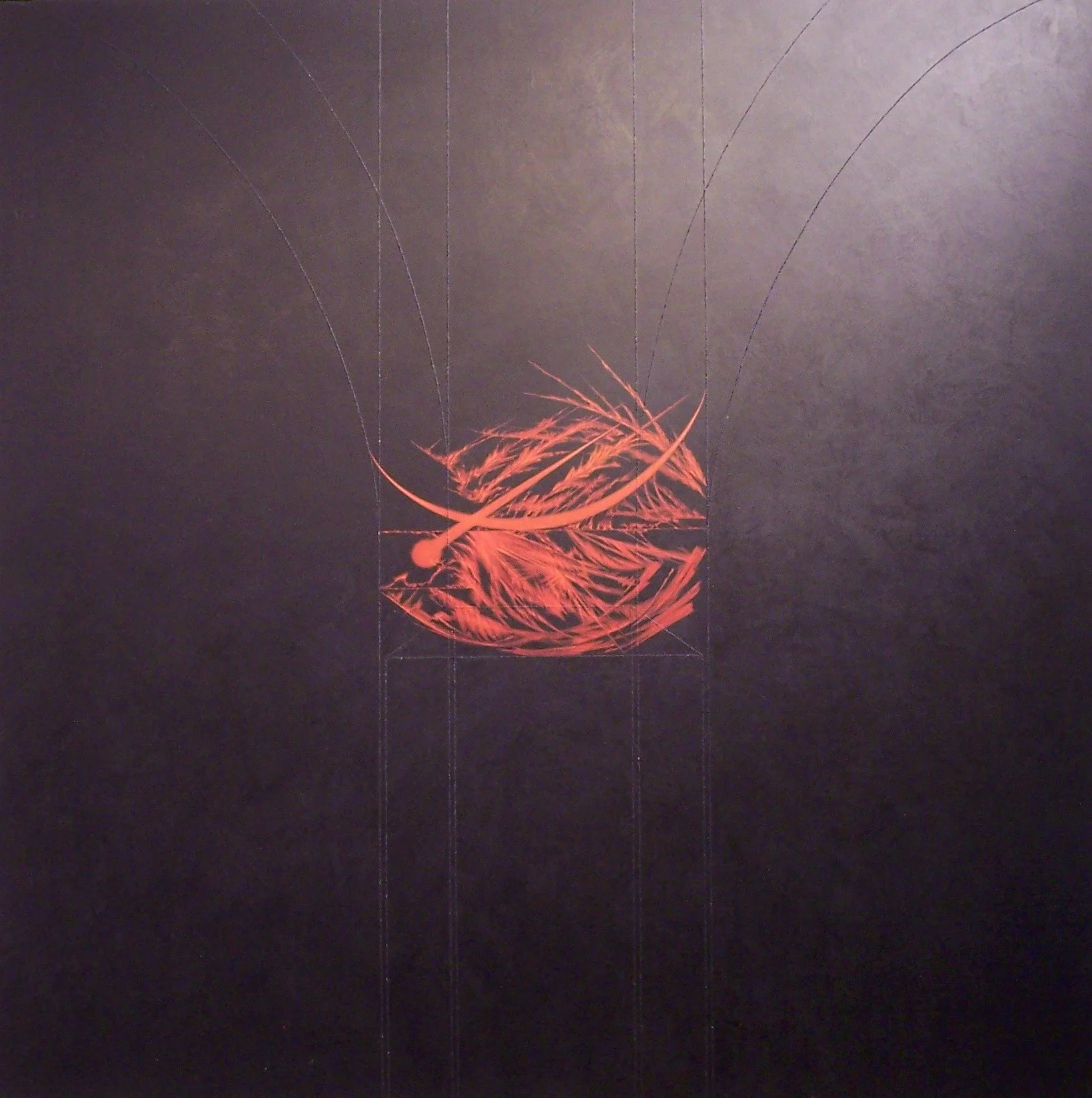
ISHMAEL, full image
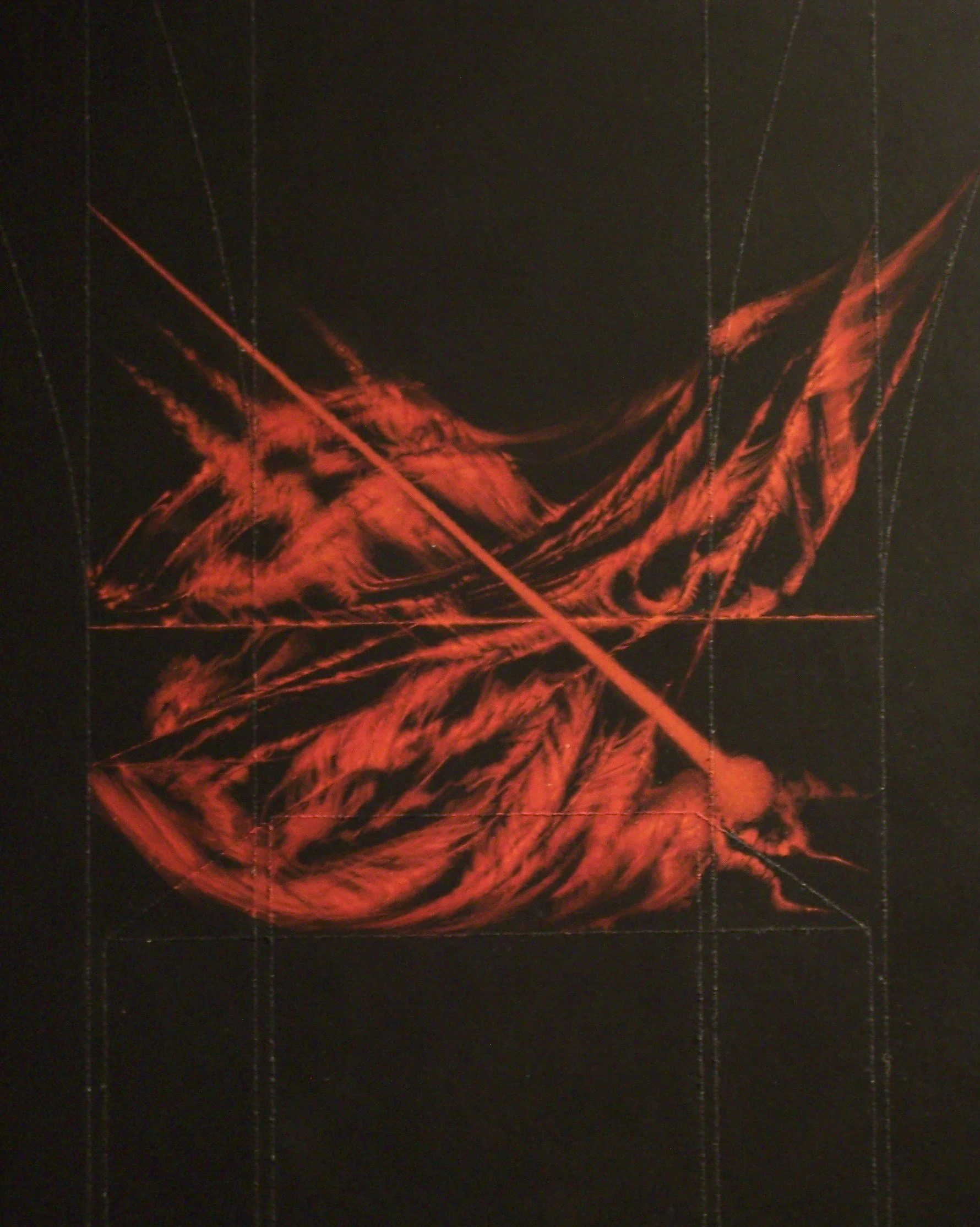
ISAAC, detail
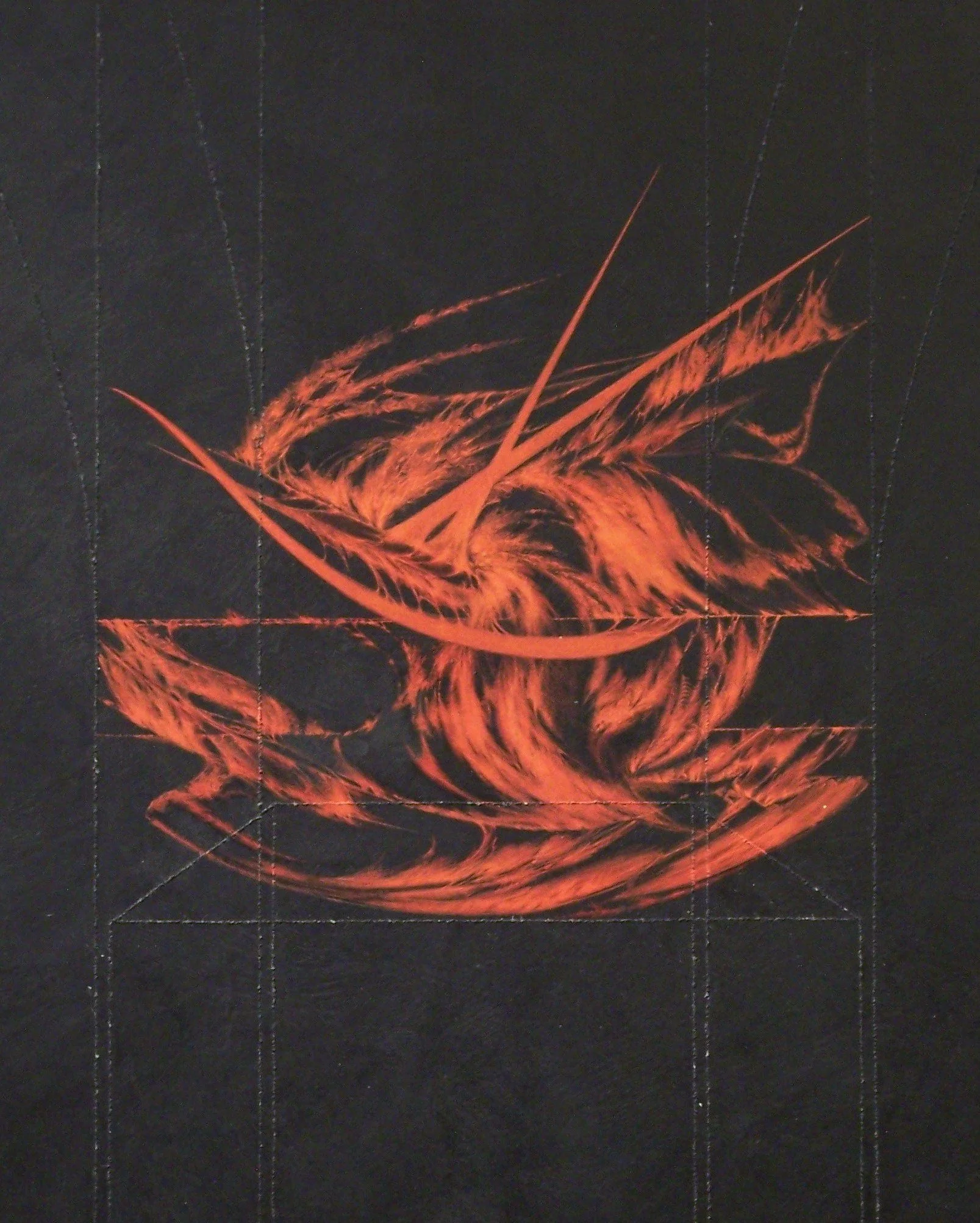
JESUS, detail
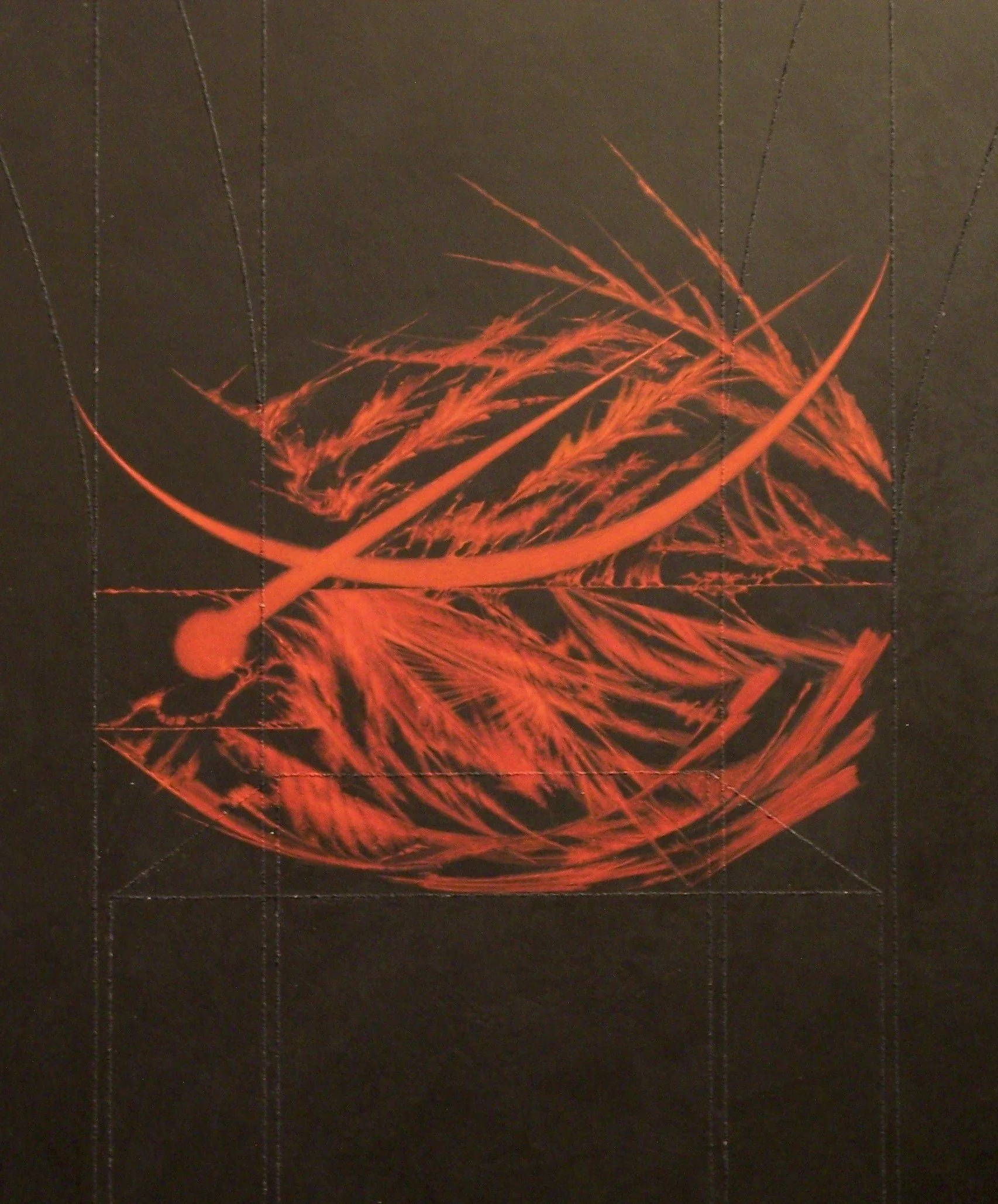
ISHMAEL, detail

STUDY for THE AKEDAH TRIPTCH, 2003. Three images, each at 14 x 14 x 1.5 inches. Permanent collection, Philip and Muriel Berman Museum of Art, Ursinus College, PA.